RESULTS REPORT
Together for a Healthier World
Programme budget 2024-2025
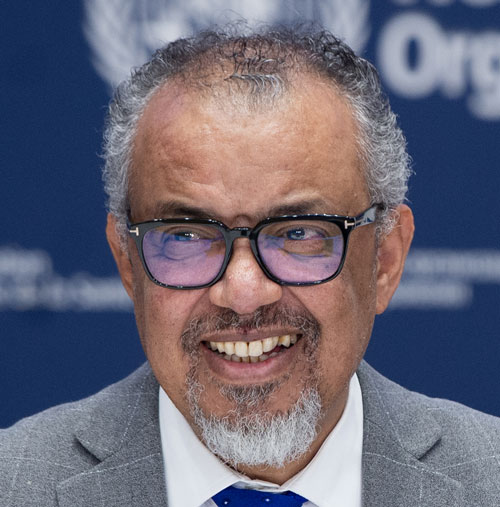 Dr Tedros Adhanom Ghebreyesus
Director-General's foreword
Dr Tedros Adhanom Ghebreyesus
Director-General's foreword
2025 was a year of hard choices— reprioritization and realignment under financial constraints, amid growing operational complexity—but WHO adapted, delivered, and continued to drive impact where it mattered most.
This Results Report presents a clear and evidence-based assessment of WHO’s performance under the Programme Budget 2024–2025, marking the conclusion of the Thirteenth General Programme of Work. It is both a record of achievement and a call to action.
The findings are unequivocal. Across the Triple Billion targets, gains have been significant: more people are living healthier lives, more are protected from health emergencies, and access to essential services has expanded. Yet progress has been insufficient and uneven.
This report reflects an intentional shift. It is more rigorous, more transparent, and more firmly anchored in measurable results. It shows where WHO delivers best—through its normative leadership, its convening power and its targeted support to countries. It also reinforces a critical truth: results depend not only on technical excellence, but on sustained financing, and strong country capacity.
Three messages stand out.
First, progress is remarkable, but fragile. Gains can quickly reverse without sustained investment and resilient systems.
Second, financing matters—not only in volume, but in flexibility. Highly earmarked and unpredictable funding continues to limit impact where it is needed most.
Third, focus is critical. Results are strongest when WHO’s comparative advantage is clearly prioritized and adequately resourced.
At a time of increasing global uncertainty, WHO’s role in the global health architecture has never been more critical. But this role cannot be sustained without predictable, flexible, and sustainable financing.
As we transition to the Fourteenth General Programme of Work, this report provides not only accountability, but direction. It is a call to sharpen our focus, strengthen our partnerships, and invest where impact is greatest.
Above all, it is a reminder: progress in global health is possible—but it is neither guaranteed nor evenly shared. It must be built, protected, and sustained—together.
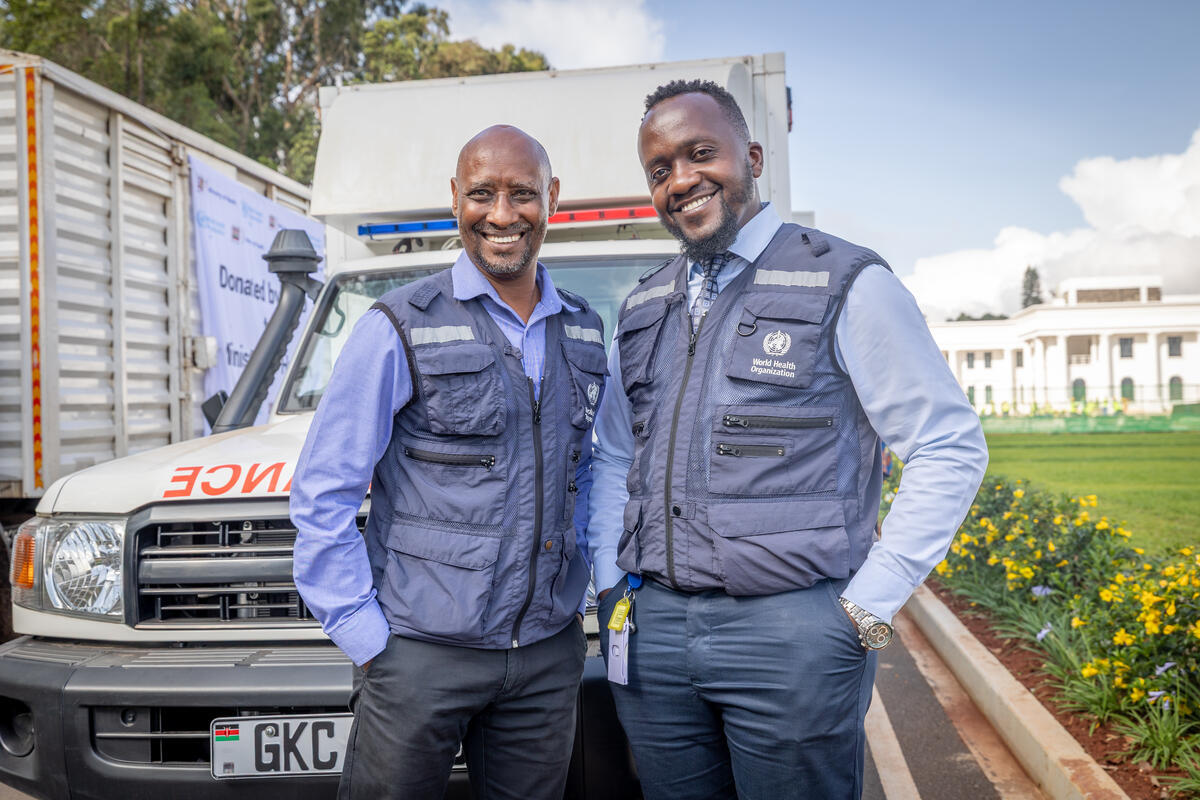
Impact on the ground
How WHO is achieving impact where it matters most



WHO CONTRIBUTIONS TOWARDS HEALTH OUTCOMES
Explore the progress
- Universal health coverage
- Health emergencies protection
- Healthier populations
- Effective and efficient WHO
- Improved access to quality essential health services irrespective of gender, age or disability status
- Reduced number of people suffering financial hardship
- Improved access to essential medicines, vaccines, diagnostics and devices for primary health care
- Countries prepared for health emergencies
- Epidemics and pandemics prevented
- Health emergencies rapidly detected and responded to
- Safe and equitable societies through addressing health determinants
- Supportive and empowering societies through addressing health risk factors
- Healthy environments to promote health and sustainable societies
- Strengthened country capacity in data and innovation
- Strengthened leadership, governance and advocacy for health
- Financial, human, and administrative resources managed in an efficient, effective, results-oriented and transparent manner
- Countries enabled to provide high-quality, people-centred health services, based on primary health care strategies and comprehensive essential service packages
- Countries enabled to strengthen their health systems to deliver on condition- and disease-specific service coverage results
- Countries enabled to strengthen their health systems to address population-specific health needs and barriers to equity across the life course
- Countries’ health governance capacity strengthened for improved transparency, accountability, responsiveness and empowerment of communities
- Countries enabled to strengthen their health and care workforce
- Countries enabled to develop and implement equitable health financing strategies and reforms to sustain progress towards universal health coverage
- Countries enabled to produce and analyse information on financial risk protection, equity and health expenditures, and to use this information to track progress and inform decision-making
- Countries enabled to improve institutional capacity for transparent decision-making in priority-setting and resource allocation, and analysis of the impact of health in the national economy
- Provision of authoritative guidance and standards on quality, safety and efficacy of health products, essential medicines and diagnostics lists
- Improved and more equitable access to health products through global market shaping and supporting countries to monitor and ensure efficient and transparent procurement and supply systems
- Country and regional regulatory capacity strengthened, and supply of quality-assured and safe health products improved, including through prequalification services
- Research and development agenda defined and research coordinated in line with public health priorities
- Countries enabled to address antimicrobial resistance through strengthened surveillance systems, laboratory capacity, infection prevention and control, awareness-raising and evidence-based policies and practices
- All-hazards emergency preparedness capacities in countries assessed and reported
- Capacities for emergency preparedness strengthened in all countries
- Countries operationally ready to assess and manage identified risks and vulnerabilities
- Research agendas, predictive models and innovative tools, products and interventions available for high-threat pathogens
- Proven prevention strategies for priority pandemic/epidemic-prone diseases implemented at scale
- Mitigate the risk of the emergence and re-emergence of high-threat pathogens and improve pandemic preparedness
- Polio eradication plans implemented in partnership with the Global Polio Eradication Initiative
- Potential health emergencies rapidly detected, and risks assessed and communicated
- Acute health emergencies rapidly responded to, leveraging relevant national and international capacities
- Essential health services and systems maintained and strengthened in fragile, conflict and vulnerable settings
- Countries enabled to address social determinants of health across the life course
- Countries enabled to strengthen equitable access to safe, healthy and sustainably produced foods through a One Health approach
- Countries enabled address risk factors through multisectoral action
- Countries enabled to reinforce partnerships across sectors, as well as governance mechanisms, laws and fiscal measures
- Countries enabled to address environmental determinants, including climate change
- Countries supported to create an enabling environment for healthy settings
- Countries enabled to strengthen data, analytics and health information systems to inform policy and deliver impacts
- GPW 13 impacts and outcomes, global and regional health trends, Sustainable Development Goals indicators, health inequalities and disaggregated data monitored
- Strengthened evidence base, prioritization and uptake of WHO generated norms and standards and improved research capacity and the ability to effectively and sustainably scale up innovations, including digital technology, in countries.
- Leadership, governance and external relations enhanced to implement GPW 13 and drive impact in an aligned manner at the country level, on the basis of strategic communications and in accordance with the SDG in the context of United Nations reform
- The Secretariat operates in an accountable, transparent, compliant and risk management-driven manner including through organizational learning and a culture of evaluation
- Strategic priorities resourced in a predictable, adequate and flexible manner through strengthening partnerships
- Planning, allocation of resources, monitoring and reporting based on country priorities, carried out to achieve country impact, value-for-money and the strategic priorities of GPW 13
- Cultural change fostered and organizational performance enhanced through coordination of the WHO-wide transformation agenda
- “Leave no one behind” approach focused on equity, gender and human rights progressively incorporated and monitored
- Sound financial practices and oversight managed through an efficient and effective internal control framework
- Effective and efficient management and development of human resources to attract, recruit and retain talent for successful programme delivery
- Effective, innovative and secure digital platforms and services aligned with the needs of users, corporate functions, technical programmes and health emergencies operations
- Safe and secure environment, with efficient infrastructure maintenance, cost-effective support services and responsive supply chain, including occupational health and safety


