EPI-WIN digests
← back to EPI-WIN homepageEPI-WIN digests provide the latest insights on a variety of critical health emergency preparedness topics. Formerly, these were known as EPI-WIN updates. EPI-WIN digests together with EPI-WIN webinar recordings and speaker presentations form EPI-WIN Knowledge Packs.
Latest digests
/country-readiness-strengthening-(crs)/community-readiness-and-resilience-(crr)/community-pictures-who.tmb-144v.jpg?sfvrsn=d4b095d5_1)
EPI-WIN digest 72 - Community Protection and Cholera: how to launch an integrated community response...
Cholera is resurging in a number of countries, including some that had not reported substantial case numbers in years, like Chad and the Republic of Congo,...
/country-readiness-strengthening-(crs)/community-readiness-and-resilience-(crr)/phi-curriculumscreenshot-2025-11-24-073857.tmb-144v.png?sfvrsn=4e17fc08_1)
EPI-WIN digest 71 - Building the future of public health intelligence (PHI): launch of the PHI Competency...
Strengthening Public Health Intelligence (PHI) is central to WHO’s mandate to detect, assess, and respond to health threats in a timely and effective...
/country-readiness-strengthening-(crs)/community-readiness-and-resilience-(crr)/whe-gwg-picture-for-supriya_12.tmb-144v.png?sfvrsn=e552b86b_1)
EPI-WIN digest 70 - UNiTE to end digital violence: why digital safety is a gender and public health imperative...
Digital violence, such as doxxing, deepfakes, and online harassment, poses significant public health risks. Nearly one in three women globally experience...
/country-readiness-strengthening-(crs)/community-readiness-and-resilience-(crr)/50033-screen-use-(1920-px).tmb-144v.jpg?sfvrsn=31402352_1)
EPI-WIN digest 69 - Defining cases of meningococcal disease: a public health tool for outbreak prevention...
Acute bacterial meningitis and invasive meningococcal disease are global public health threats that require sustained control efforts. Under the framework...
/country-readiness-strengthening-(crs)/community-readiness-and-resilience-(crr)/181801-screen-use-(1920-px).tmb-144v.jpg?sfvrsn=89465d2c_1)
EPI-WIN digest 68 - Attributes of pathogen genomic data platforms supporting timely and equitable sharing
The International Pathogen Surveillance Network (IPSN) is a global network of pathogen genomic actors, brought together by the WHO Hub for Pandemic and...
/country-readiness-strengthening-(crs)/community-readiness-and-resilience-(crr)/146199.tmb-144v.jpg?sfvrsn=4ac5432e_1)
The Outbreak Toolkit (OTK) was developed to support rapid detection, response to and sustain effective response to all health emergencies. The OTK...
/country-readiness-strengthening-(crs)/community-readiness-and-resilience-(crr)/25352.tmb-144v.jpg?sfvrsn=462d5ee3_1)
EPI-WIN digest 66 - Rift Valley Fever and community protection: gaps, needs and priorities
Since September 2025, Senegal and Mauritania have been facing an unusually severe outbreak of Rift Valley fever (RVF), affecting both human and animal...
/country-readiness-strengthening-(crs)/community-readiness-and-resilience-(crr)/epiwin_image.tmb-144v.png?sfvrsn=83a30df1_1)
EPI-WIN digest 65 - From Data to Action: Understanding how WHO’s global surveillance on coronaviruses...
Continuous tracking of coronavirus threats, including COVID-19, provides the scientific foundation for public health decisions. It enables WHO and countries...
/country-readiness-strengthening-(crs)/community-readiness-and-resilience-(crr)/picture1.tmb-144v.jpg?sfvrsn=a67d4383_1)
EPI-WIN digest 64 - Strengthening One Health multisectoral collaboration through the National Bridging...
The National Bridging Workshop (NBW) Program is a Tripartite (WHO, FAO, WOAH) program focusing on the workshops sensus stricto and the subsequent implementation...
/country-readiness-strengthening-(crs)/community-readiness-and-resilience-(crr)/20220321_b4hxwho_png_3607.tmb-144v.jpg?sfvrsn=b9d747b1_1)
EPI-WIN digest 63 - A Framework for civil society organization engagement for public health emergencies:...
Civil society organizations (CSOs) play a very important role in health emergencies. During the COVID-19 pandemic, for example, innovative local...
/country-readiness-strengthening-(crs)/community-readiness-and-resilience-(crr)/pc-and-capmap-visual.tmb-144v.png?sfvrsn=d0660d1a_1)
EPI-WIN digest 62 - Stronger together: innovative risk communication and community engagement (RCCE)...
Risk Communication and Community Engagement - Infodemic Management (RCCE-IM) is central to WHO’s mission in health emergencies because it goes beyond...
/country-readiness-strengthening-(crs)/community-readiness-and-resilience-(crr)/who_whe_seasonal-vaccination_sm-tiles_120925_1pm_bk_folder.tmb-144v.jpg?sfvrsn=fd1ab7df_1)
Seasonal influenza has routinely overwhelmed health systems during years with severe epidemics. Seasonal influenza vaccination can mitigate the impacts...
/country-readiness-strengthening-(crs)/community-readiness-and-resilience-(crr)/metagenomics_webinar563c910b-96f3-4267-a2fe-fb769a8454a6.tmb-144v.png?sfvrsn=b739afe2_1)
EPI-WIN digest 60 - The Utility of Pathogen Genomics: Metagenomics surveillance for emerging threats
The International Pathogen Surveillance Network (IPSN) is a global network of pathogen genomic actors, brought together by the WHO Hub for Pandemic and...
/country-readiness-strengthening-(crs)/community-readiness-and-resilience-(crr)/cholera-riskcomms2-drc.tmb-144v.jpg?sfvrsn=73723663_1)
EPI-WIN digest 59 - Community Protection for Cholera: Risk Communication and Community engagement (RCCE)
Cholera remains a significant global public health threat, closely linked to inequality and inadequate social and economic development. Since 2021, the...
/country-readiness-strengthening-(crs)/community-readiness-and-resilience-(crr)/dsc03193-(1).tmb-144v.jpg?sfvrsn=7a424a85_1)
EPI-WIN digest 58 - Introducing Integrated Outbreak Analytics (IOA)
Integrated outbreak analytics (IOA) aims to support the successful detection, investigation and response to outbreaks in a contextual, holistic, sustainable,...
/country-readiness-strengthening-(crs)/community-readiness-and-resilience-(crr)/ipc-wash-hero-cape-chatgpt-image-aug-21--2025--12_39_24-pm-(1).tmb-144v.png?sfvrsn=44d6eca7_1)
EPI-WIN digest 57 - WHO Infection prevention and control (IPC) and Water, sanitation and Hygiene (WASH)...
Infectious disease outbreaks continue to challenge fragile health systems, especially in low-resource, humanitarian, and emergency settings. Despite advancements...
/country-readiness-strengthening-(crs)/community-readiness-and-resilience-(crr)/jra-ot.tmb-144v.png?sfvrsn=73668cdc_1)
EPI-WIN digest 56 - Global Applications of the One Health Joint Risk Assessment Operational Tool (JRA...
The Joint Risk Assessment Operational Tool (JRA OT) was developed by the Tripartite (the Food and Agriculture Organization of the United Nations,...
/country-readiness-strengthening-(crs)/community-readiness-and-resilience-(crr)/jpeg-(1).tmb-144v.jpg?sfvrsn=ae17b269_2)
EPI-WIN digest 55 - Respiratory syncytial virus (RSV) Genomic Surveillance: How and why
Respiratory syncytial virus (RSV) is a common virus that causes infections of the upper and lower respiratory airways (including the nose, sinuses and...
/country-readiness-strengthening-(crs)/community-readiness-and-resilience-(crr)/madagascar-highlands-bubonic-plague-diagnosis.tmb-144v.jpg?sfvrsn=a7a2b317_1)
EPI-WIN digest 54 - Plague in the 21st century: new evidence to control a re-emerging zoonotic disease
Plague, a zoonotic disease caused by the bacterium Yersinia pestis, has affected humans for thousands of years and has been responsible for three...
/country-readiness-strengthening-(crs)/community-readiness-and-resilience-(crr)/beat-the-heat-banner-cropped.tmb-144v.jpg?sfvrsn=a5bbb703_1)
EPI-WIN digest 53 - Managing the heat: strengthening public health preparedness for mass gatherings in...
With summer 2025 expected to bring new global temperature records, the increasing frequency and intensity of extreme heat events poses an urgent challenge...
/country-readiness-strengthening-(crs)/community-readiness-and-resilience-(crr)/image-(1).tmb-144v.jpg?sfvrsn=b64305b1_1)
The International Pathogen Surveillance Network (IPSN) is a global network of pathogen genomic actors, brought together by the WHO Hub for Pandemic and...
/country-readiness-strengthening-(crs)/community-readiness-and-resilience-(crr)/mpox-pic.tmb-144v.jpg?sfvrsn=d084a914_1)
EPI-WIN digest 51 - New guidelines for mpox clinical management and infection prevention and control
Since the 2022 global outbreak of Mpox, caused by the monkeypox virus (MPXV), the epidemiological landscape has continued to evolve. While the initial...
/country-readiness-strengthening-(crs)/community-readiness-and-resilience-(crr)/ard_7620.tmb-144v.jpg?sfvrsn=af610112_1)
EPI-WIN digest 37 - Mass gatherings, safe gatherings: addressing challenges in religious events
Mass gatherings such as large-scale religious events or pilgrimages can pose public health challenges and put pressure on the...
/country-readiness-strengthening-(crs)/community-readiness-and-resilience-(crr)/mhpss-in-health-emergencies.tmb-144v.png?sfvrsn=78e137b3_1)
EPI-WIN digest 36 - Mental health and psychosocial support aspects of responding to public health emergencies:...
Humanitarian emergencies cause widespread suffering, affecting people’s mental health and psychosocial well-being. Almost all people affected by...
/country-readiness-strengthening-(crs)/community-readiness-and-resilience-(crr)/coughing-woman.tmb-144v.png?sfvrsn=b188f0f7_1)
EPI-WIN digest 35 - Update on influenza, COVID-19 and other respiratory viruses: focus on the winter...
This digest provides an update on current influenza virus, SARS-CoV-2, RSV and other respiratory virus activity in the northern hemisphere winter...
/country-readiness-strengthening-(crs)/community-readiness-and-resilience-(crr)/2017-kaz-marathon.tmb-144v.jpg?sfvrsn=62a76bd3_1)
EPI-WIN digest 34 - Safe sporting events, stronger public health: key considerations and country experiences...
Mass gatherings, like sporting events or religious pilgrimages, are highly visible events attended by tens of thousands of people. They can pose public...
/country-readiness-strengthening-(crs)/community-readiness-and-resilience-(crr)/uganda-flickr.tmb-144v.jpg?sfvrsn=c227c950_1)
Sudan virus disease is a severe, often fatal illness affecting humans and other primates that is due to Orthoebolavirus sudanense (Sudan virus),...
/country-readiness-strengthening-(crs)/community-readiness-and-resilience-(crr)/who_060460.tmb-144v.jpg?sfvrsn=143d8bb_1)
EPI-WIN digest 32 - Developing a dynamic workforce for One Health: WHO approaches and applications
Although it is well recognized that a multi-sectoral, One Health approach to diseases at the human–animal–environment interface...
/country-readiness-strengthening-(crs)/community-readiness-and-resilience-(crr)/cholera_ipsn.tmb-144v.jpg?sfvrsn=b83a31cc_1)
The International Pathogen Surveillance Network (IPSN) is a global network of pathogen genomic actors, brought together by the WHO Hub for Pandemic...
/country-readiness-strengthening-(crs)/community-readiness-and-resilience-(crr)/nn_who_day2_008.tmb-144v.jpg?sfvrsn=558329fe_1)
EPI-WIN digest 30 - Integrated sentinel surveillance for influenza and other respiratory viruses – standards...
For the first time, there is integrated guidance for three respiratory diseases- influenza, SARS-CoV-2 and RSV. This digest gives an...
/country-readiness-strengthening-(crs)/community-readiness-and-resilience-(crr)/one-health-image.tmb-144v.png?sfvrsn=1442b59b_3)
EPI-WIN digest 29 - One Health Intelligence
The Global Early Warning and Prevention System (GLEWS) identifies and monitors disease events, develops epidemiological intelligence for identification...
/country-readiness-strengthening-(crs)/community-readiness-and-resilience-(crr)/merstracker.tmb-144v.jpg?sfvrsn=87f260cc_1)
EPI-WIN digest 27 - Launch of MERS-tracker: an interactive dashboard to support evidence based decision...
WHO’s Emerging Diseases and Zoonoses unit has been collaborating with the University of Calgary Serotracker team and the Food and Agriculture...
/country-readiness-strengthening-(crs)/community-readiness-and-resilience-(crr)/20230219_connect_savannakhet-2467.tmb-144v.jpg?sfvrsn=3e25eac9_1)
EPI-WIN digest 26 - Engaging communities in early outbreak detection and response action through community-based...
The Covid-19 pandemic has highlighted the importance of stronger community early warning systems and the potential of community roles in case detection,...
/country-readiness-strengthening-(crs)/community-readiness-and-resilience-(crr)/who-speaker-series-8---129.tmb-144v.jpg?sfvrsn=fc42b36f_1)
The World Health Organization (WHO) implements a robust approach to public health intelligence (PHI) for the global detection, verification and risk assessment...
/country-readiness-strengthening-(crs)/community-readiness-and-resilience-(crr)/31-08-2024---oms---crise-humanitaire---mpox---sud-kivu---drc---71766.tmb-144v.jpg?sfvrsn=3200b469_1)
EPI-WIN digest 24 - Safe at Home: IPC & WASH measures for home care and isolation for mpox in resource-limited...
This webinar aimed to describe and discuss the WHO IPC and WASH guidance for home-based care and isolation in low-resource settings.For further information,...
/country-readiness-strengthening-(crs)/community-readiness-and-resilience-(crr)/_dsc4203.tmb-144v.jpg?sfvrsn=ac6b2938_1)
EPI-WIN digest 23 - STAR experience in managing health emergencies and disasters, including climate crisis...
As countries are often dealing with concurrent threats of cyclones, disease outbreaks, flood, earthquakes, conflicts etc, at any given time, gaining understanding...
EPI-WIN digest 22 - Infection prevention and control & WASH: Keeping patients and health workers safe...
This webinar aimed to emphasize the WHO infection prevention and control (IPC) and water, sanitation and hygiene (WASH) recommendations and available tools...
/country-readiness-strengthening-(crs)/community-readiness-and-resilience-(crr)/20230219_connect_savannakhet-2128.tmb-144v.jpg?sfvrsn=6ca04dab_1)
EPI-WIN digest 21 - WHO’s Global Health and Peace Initiative (GHPI): Overview and Case Study from Cameroon
Approximately 80% of the World Health Organization (WHO)’s humanitarian caseload and 70% of disease outbreaks that WHO responds to take place in...
/country-readiness-strengthening-(crs)/community-readiness-and-resilience-(crr)/image_for_webinar.tmb-144v.jpg?sfvrsn=dbd34bbb_1)
EPI-WIN digest 20 - Understanding and implementing WHO’s MERS-CoV investigation protocols
Middle East respiratory syndrome coronavirus (MERS-CoV), first identified in 2012, is an emerging zoonotic virus with significant epidemic and pandemic...
/country-readiness-strengthening-(crs)/community-readiness-and-resilience-(crr)/core-clinical-services-03oct2024_page-0001.tmb-144v.jpg?sfvrsn=786af642_1)
EPI-WIN digest 19 - Strengthening core clinical services for emergency preparedness: Lessons learned...
Health systems can often be overwhelmed during crises, therefore building resilient health systems as part of preparedness and resilience for emergencies...
/country-readiness-strengthening-(crs)/community-readiness-and-resilience-(crr)/14-08-2024---oms---crise-humanitaire---mpox---goma---drc---70227.tmb-144v.jpg?sfvrsn=824d0da4_1)
EPI-WIN digest 18 - Collaborative Surveillance for the current mpox public health emergency response
The global mpox outbreak, which began in 2022, has resulted in over 100,000 confirmed cases reported to the WHO. The rapid spread of the new Clade...
/country-readiness-strengthening-(crs)/community-readiness-and-resilience-(crr)/img_20230326_131817_296(1).tmb-144v.jpg?sfvrsn=fe0f758_1)
EPI-WIN digest 17 - Treatment and medical support for patients with mpox, and their families
The global mpox outbreak, which began in 2022, has resulted in over 100,000 confirmed cases reported to the WHO. The rapid spread of the new Clade 1B strain,...
/country-readiness-strengthening-(crs)/community-readiness-and-resilience-(crr)/an-update-with-csos-on-the-mpox-emergency-and-response.tmb-144v.jpg?sfvrsn=2ab56ccd_1)
EPI-WIN digest 16 - An update for Civil Society Organizations (CSOs) on the mpox emergency and response
The global mpox outbreak, which began in 2022, has resulted in over 100,000 confirmed cases reported to the WHO. The rapid spread of the new Clade 1B strain,...
/country-readiness-strengthening-(crs)/community-readiness-and-resilience-(crr)/lweki-area-tunda-hz-24.tmb-144v.jpg?sfvrsn=d3f4001e_1)
EPI-WIN digest 15 - Responding to mpox: Community Protection
The WHO Director General declared mpox a Public Health Emergency of International Concern (PHEIC), as new clade of the virus, clade 1b, spread rapidly...
/country-readiness-strengthening-(crs)/community-readiness-and-resilience-(crr)/untitled.tmb-1920v.tmb-144v.jpg?sfvrsn=6105bf11_1)
The International Pathogen Surveillance Network (IPSN) is a global network of pathogen genomic actors, brought together by the WHO Hub for Pandemic...
/country-readiness-strengthening-(crs)/community-readiness-and-resilience-(crr)/infodemic-ht-hero-image_b49c64d6-287d-46e3-9c50-88edb228f25ctmb-1920v.tmb-144v.png?sfvrsn=ef3f438f_1)
WHO Headquarters organized a webinar on infodemic management, following numerous requests from countries. This webinar focused on the operationalization...
/country-readiness-strengthening-(crs)/community-readiness-and-resilience-(crr)/z62_0555.tmb-1920v-444643359.tmb-144v.jpg?sfvrsn=6039bc37_1)
Dengue is a mosquito-borne viral disease caused by the dengue virus and remains a serious global public health threat. Dengue infections are the most common...
/country-readiness-strengthening-(crs)/community-readiness-and-resilience-(crr)/epi-win-h5-6-junea676d28c-d1bb-473c-90d4-060058e3315f.tmb-1920v.tmb-144v.jpg?sfvrsn=44cf8ecc_1)
Since the EPI-WIN webinar on "Public health risk of avian influenza A(H5N1) detected recently in dairy cattle" held on 6 May 2024, more human...
The Global Preparedness and Monitoring Board (GPMB) works with countries to improve pandemic and other disease outbreak preparedness. The GPMB's 2023...
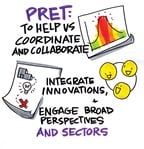
EPI-WIN digest 9 - Frequently asked questions about the Preparedness and Resilience for Emerging Threats...
The Preparedness and Resilience for Emerging Threats (PRET) is an innovative approach to improving disease pandemic preparedness.This EPI-WIN digest...